Date: 25 Aqrab 1405 (November 16, 2026)
Addressees:
- The Presidency and the Office of the Prosecutor of the International Criminal Court (ICC)
- The Government of the French Republic and its Ministry for Europe and Foreign Affairs
- The European Parliament
- The Office of the United Nations High Commissioner for Human Rights (OHCHR)
- The European Union and the International Community
Subject: Protest Against Undermining the Justice Process for Victims in Afghanistan and Any Steps Toward Normalizing Relations with the Taliban
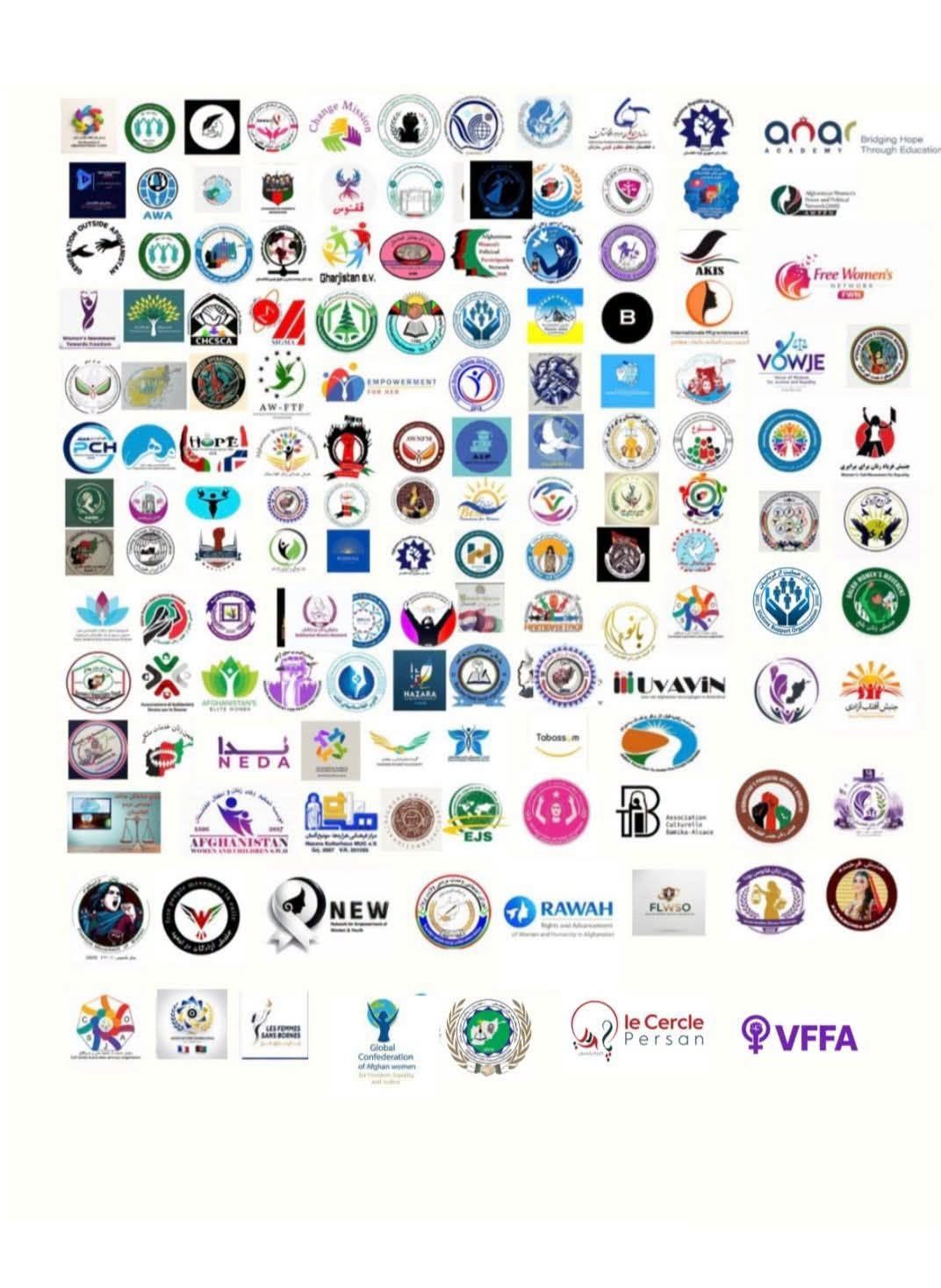
We, more than 144 human rights institutions, associations, and organizations, civil society entities, women’s rights activists, and Afghan women’s protest movements, express our deep concern and strong protest regarding recent developments in the handling of crimes committed in Afghanistan at the International Criminal Court, as well as media reports concerning consular interactions between the Government of France and representatives of the Taliban.
We believe these developments risk jeopardizing justice for victims in Afghanistan, the fundamental rights of women and girls, and the safety of Afghan refugees. No political expediency, migration agreement, or diplomatic engagement should take precedence over fundamental human rights principles and accountability for international crimes.
1. Protest Against Restricting the Scope of the International Criminal Court’s Investigation into Afghanistan
The recent judicial decision by the International Criminal Court (Pre-Trial Chamber of the Court, November 12, 2026) to terminate part of the investigation concerning the situation in Afghanistan between 2003 and 2021 has raised grave concern regarding the future of justice for thousands of victims of war crimes and crimes against humanity.
Difficulties in accessing evidence and conducting investigations must not be used as a pretext to undermine the victims’ right to seek justice or to set aside the criminal responsibility of perpetrators.
While supporting the continuation of investigations into crimes committed after August 2021—particularly the systematic persecution of Afghan women and girls—we emphasize that justice must not be confined to a specific timeframe, a single group, or one category of perpetrators.
Victims in Afghanistan, regardless of the identity of the perpetrators or their political, military, or organizational affiliations, are entitled to equal, comprehensive, and non-discriminatory justice.
Restricting the scope of investigations risks creating an accountability vacuum and undermining the justice process for victims of other crimes committed in Afghanistan. Selective justice is incomplete justice, and no victim should be deprived of the right to redress due to political considerations or operational challenges.
2. Protest Against the French Government’s Consular Interactions with Taliban Representatives
At the same time, reports published in credible international and French media regarding the French government’s potential agreement to host Taliban representatives in Paris, within the framework of technical and consular interactions aimed at facilitating the return of Afghan refugees, have caused us deep alarm. These reports have not yet been officially confirmed with transparent details, and we call upon the Government of France to state its clear and public position.
The Taliban are not a government that enjoys popular legitimacy or holds accountability to the people of Afghanistan. Through the enforcement of systematic discriminatory policies, particularly against women and girls, this group has violated the fundamental rights of millions of Afghan citizens.
The issuance of arrest warrants by the International Criminal Court against senior Taliban officials on charges of crimes against humanity through persecution on gender and political grounds demonstrates the gravity of this group’s criminal liability at the international level.
We emphasize that there is a distinction between technical and consular interactions on the one hand, and formal recognition and the granting of political and diplomatic legitimacy on the other. Nevertheless, any engagement with representatives of this group, without clear and effective human rights guarantees, risks leading to the gradual normalization of repression and strengthening the Taliban’s political standing.
In particular, utilizing consular mechanisms to facilitate the return of Afghan refugees to a country where they face the risk of persecution, arbitrary detention, torture, systematic discrimination, and widespread violations of fundamental rights raises serious legal and humanitarian concerns.
We remind the Government of France that the international principle of Non-refoulement prohibits states from returning individuals to a territory where they face a real risk of torture, persecution, or other irreparable harm.
Furthermore, any consular cooperation must be accompanied by full guarantees of security, confidentiality, and protection of refugees’ personal, identity, and security data. Such information must not be placed at the disposal of a structure likely to use it to threaten, intimidate, pursue, or exert pressure on refugees, political opponents, and their families.
3. Our Explicit Demands
A) To the International Criminal Court (ICC):
- Thoroughly and effectively review the Prosecution’s appeal request and reconsider the decision terminating the investigation into the first phase of the Afghanistan case.
- Ensure continued efforts to hold all perpetrators of war crimes and crimes against humanity in Afghanistan accountable, without discrimination or political considerations.
- Take necessary measures to prevent an accountability vacuum in the justice process and safeguard the rights of victims of crimes committed between 2003 and 2021.
- Expedite the enforcement of arrest warrants issued against senior Taliban officials and effectively pursue proceedings regarding charges of crimes against humanity, particularly gender-based persecution.
B) To the Government of the French Republic:
- Publicly disclose the framework, conditions, and scope of any consular interaction with Taliban representatives, and refrain from any action that could confer political or diplomatic credibility upon them.
- Refrain from handing over the consular affairs of the Afghan embassy and diplomatic missions to the Taliban in a manner that would result in the de facto legitimization of the group.
- Guarantee that no consular or migration cooperation leads to a violation of the principle of non-refoulement of Afghan refugees.
- Guarantee that the Taliban have no access to refugees’ case files or personal and security information, so as not to endanger their safety and that of their families.
- Uphold the policy of non-recognition of the Taliban and prevent the normalization of political and diplomatic relations with this group until the systematic violation of human rights and the deprivation of women and girls of their fundamental rights have ended.
C) To the European Union and the International Community:
- Practically uphold human rights commitments and prevent the rights of the people of Afghanistan from being sacrificed for short-term political and migration agreements.
- Support independent international mechanisms to document, investigate, and prosecute all crimes committed in Afghanistan.
- Provide effective support to women, girls, human rights defenders, journalists, civil society activists, and other at-risk groups in Afghanistan.
- Refrain from any political or diplomatic action that could normalize the systematic repression of women and reinforce impunity for perpetrators of crimes.
- Ensure Afghan victims’ access to justice, legal support, and effective redress mechanisms at the international level.
Respectfully, and with emphasis on our shared responsibility in defending justice and human dignity,
Signatories: